
Why Direct Mail Still Wins for Local Businesses
In a world of infinite scroll, a beautifully printed piece in the mailbox cuts through the noise and builds trust faster than any ad platform.
By The Chamber Grow Team
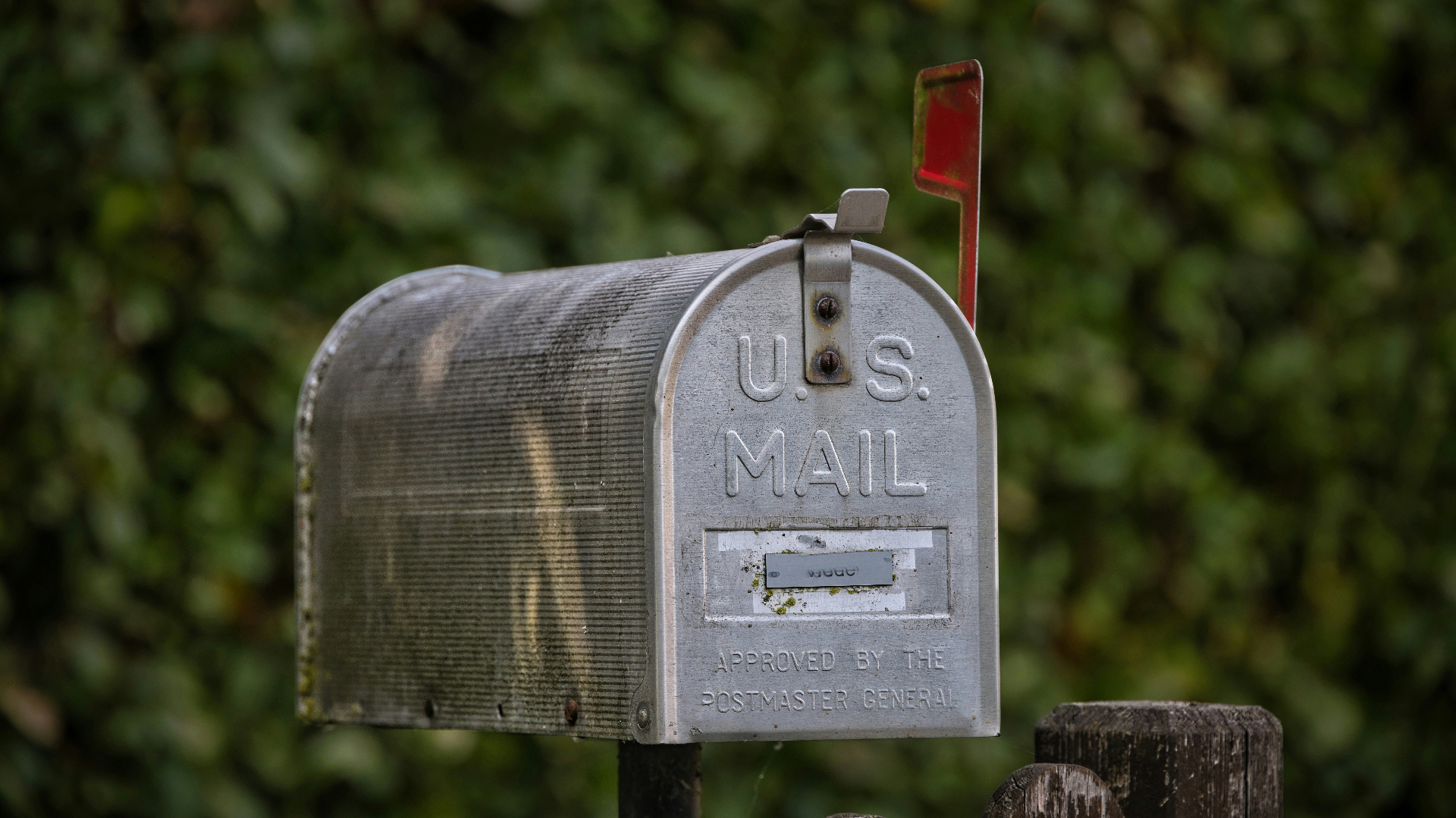
Every year, someone declares direct mail dead. And every year, the businesses quietly winning their local market keep sending it. The reason is simple: direct mail is one of the last advertising channels where you can be certain your message reached a real human in a real home.
This isn't a nostalgia argument. It's a math argument. Once you see the numbers, you can't unsee them.
The mailbox is one of the last uncrowded channels left
The average American adult now sees thousands of advertising impressions per day. Their inbox is overflowing. Their social feed is an infinite scroll of thumbnails. Their podcast has mid-rolls. Their streaming service just added an ad tier. The digital attention economy isn't just crowded. It has passed the point of diminishing returns for most advertisers.
The mailbox, by contrast, is physically finite. A typical household receives a small handful of pieces per day. The person walks up to the box, pulls out the stack, and touches every single piece before deciding what to keep. There is no algorithm, no thumb-scroll, no ad-blocker. That guaranteed human attention is something no digital platform can promise at any price.
Physical is trusted in ways digital simply isn't
Every major study of consumer trust in advertising reaches the same conclusion: physical mail is trusted more than digital ads. Direct mail consistently ranks among the top two or three most trusted formats, well ahead of banner ads, pop-ups, paid search, and social advertising.
The reason is psychological. Something you can hold in your hand has been paid for. Someone designed it, printed it, paid postage on it, and put their business name on a physical object sent to your home. That chain of tangible investment communicates something a $2 boosted post cannot. It says this is a real business, standing behind a real offer, willing to put its name on paper.
This trust premium matters most for service categories where trust is the entire purchase decision, such as home repair, healthcare, financial services, and auto repair. These are purchases that involve letting a stranger into your house, your body, or your bank account. The household isn't just buying a service; they're buying reassurance. And a well-designed physical piece delivers reassurance in a way no digital ad can.
It lives longer than a scroll
A social ad has a shelf life measured in seconds. An email has a shelf life measured in hours if you're lucky. A great physical mailer has a shelf life measured in weeks.
Once a well-designed piece is in the home, it doesn't disappear. It sits on the counter, ends up on the fridge, or gets slipped into the 'things we might need later' folder. It gets seen by the person who brought in the mail, their spouse, their kids, their guests. It becomes part of the household's ambient information environment.
That extended shelf life is a big part of why direct mail routinely produces response rates several times higher than email or display advertising. DMA studies show direct mail response rates in the 4 to 9% range for house lists, versus fractions of a percent for most digital display. And direct mail responses tend to have higher average order values, because the format itself pre-qualifies serious buyers.
The catch: format is everything
None of this works if the piece feels like junk mail. Cluttered coupon envelopes, generic marriage-mail packets, and cheap postcards that scream sale-flyer aesthetic all get sorted into the recycling bin at the same speed as spam email.
What works is the opposite: scale, restraint, and design quality. An oversized format that doesn't fit the junk stack. Editorial typography instead of shouty fonts. Real photography of real people and places. A single clear offer instead of a wall of noise. Room to breathe. A story instead of a slogan.
When a piece looks like something a person would keep, something that could plausibly have been mailed by the town or by a magazine, households treat it differently. They read it, keep it, talk about it, and act on it.
Category exclusivity: the multiplier no other channel offers
Every other advertising channel is auction-based or shared-shelf. Google shows your competitor's ad above yours. Facebook shows three competing home service companies in the same session. The newspaper runs your quarter-page ad next to a competitor's coupon. You're paying to be compared.
A well-designed local mailer can be built with category exclusivity, meaning only one business per category per issue. When neighbors open the piece, there is no competing offer. There is just you, presented alongside non-competing local businesses in a format that reads like a community feature. That exclusivity turns the piece from an advertisement into a recommendation, and it compounds over time.
The right way to think about it
Direct mail is not the answer to every marketing problem. It's a bad fit for last-minute events, hyper-narrow B2B targeting, real-time optimization, or businesses whose customers don't live in a defined geography.
But if you're a local business trying to reach the households that actually spend money in your neighborhood, the ones who drive past your storefront, whose kids go to local schools, and who need a plumber next Tuesday, direct mail remains the single most reliable way to put a considered, trusted message in front of them.
The digital channels will keep changing. Platforms will rise and fall. Algorithms will tighten. Ad costs will climb as auctions get more crowded. Through all of it, the mailbox will keep being what it has been for a century: a small, uncrowded, physically direct connection between a business and its neighbors.
Keep reading
Direct Mail
Newspaper Ads vs. the 9×12 Postcard: Why the Math Doesn't Even Come Close
Local newspaper ads feel familiar and safe, but on cost, reach, and attention, an oversized 9×12 postcard beats them on every line of the spreadsheet.
Marketing Strategy
Category Exclusivity: The Smart Way to Stand Out
When your business is the only one of its kind featured on the piece, you stop competing for attention and start owning it.